Unclear task
The agent receives a broad goal without defined inputs, a completion check, or limits on what it can change.
Agentic Engineering
We build AI agents that use your business data and tools to complete defined tasks. Each workflow has clear permissions, quality checks, and a handoff when someone needs to decide.
The problem
Completing a business task takes several steps. The agent needs the right information, permission to act, and a way to check whether the work is complete.
The agent receives a broad goal without defined inputs, a completion check, or limits on what it can change.
Useful information sits in documents and business applications the agent cannot reach or update.
Plausible answers hide missed steps or incorrect actions. Teams need checks against the actual job.
What we build
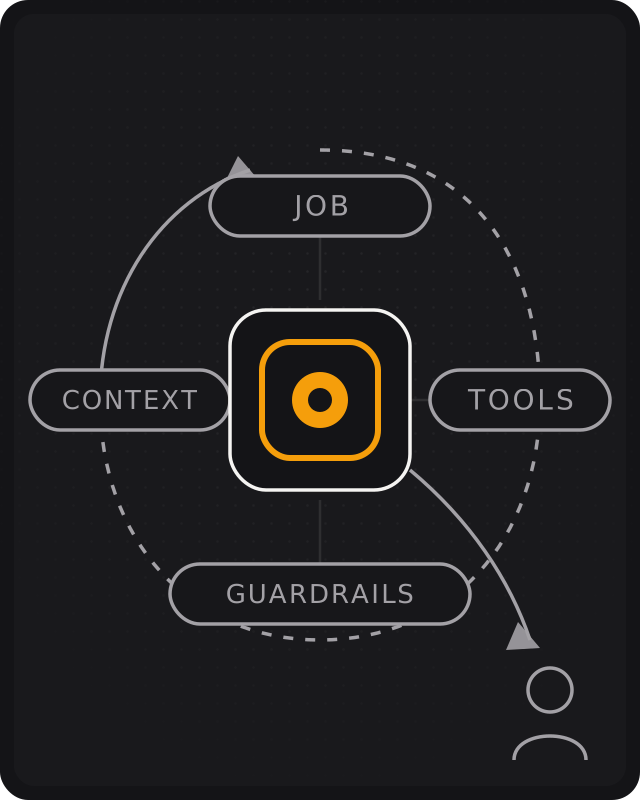
We start with one job, map the steps, and build the agent into your existing systems. Your team helps define when it can act and when it should ask for help.
Define inputs, actions, and completion criteria. Set decision points, failure handling, and handoffs to the people responsible for the work.
Connect approved documents, APIs, and business systems. Give the agent the context and permissions each task requires.
Test representative cases, check results against source data, and record actions. Set limits on tool use and require review for consequential changes.
Deploy in your environment with monitoring and usage budgets. Leave documented workflows, runbooks, and a team that knows how to support and improve the agent.
Agents in practice
Use an agent where the job requires interpreting information and choosing the next step. Keep clear checks around the actions it takes.
Read a request, retrieve account details, and prepare a response. Route exceptions to a person and update the service system after approval.
Classify documents, extract required fields, and check them against source records. Send missing or conflicting information for review.
Gather updates across systems, identify missing steps, and prepare follow-up actions for the team to review.
Measure task completion, errors, human intervention, and cost per job. Use those results to decide where the agent can take on more responsibility.